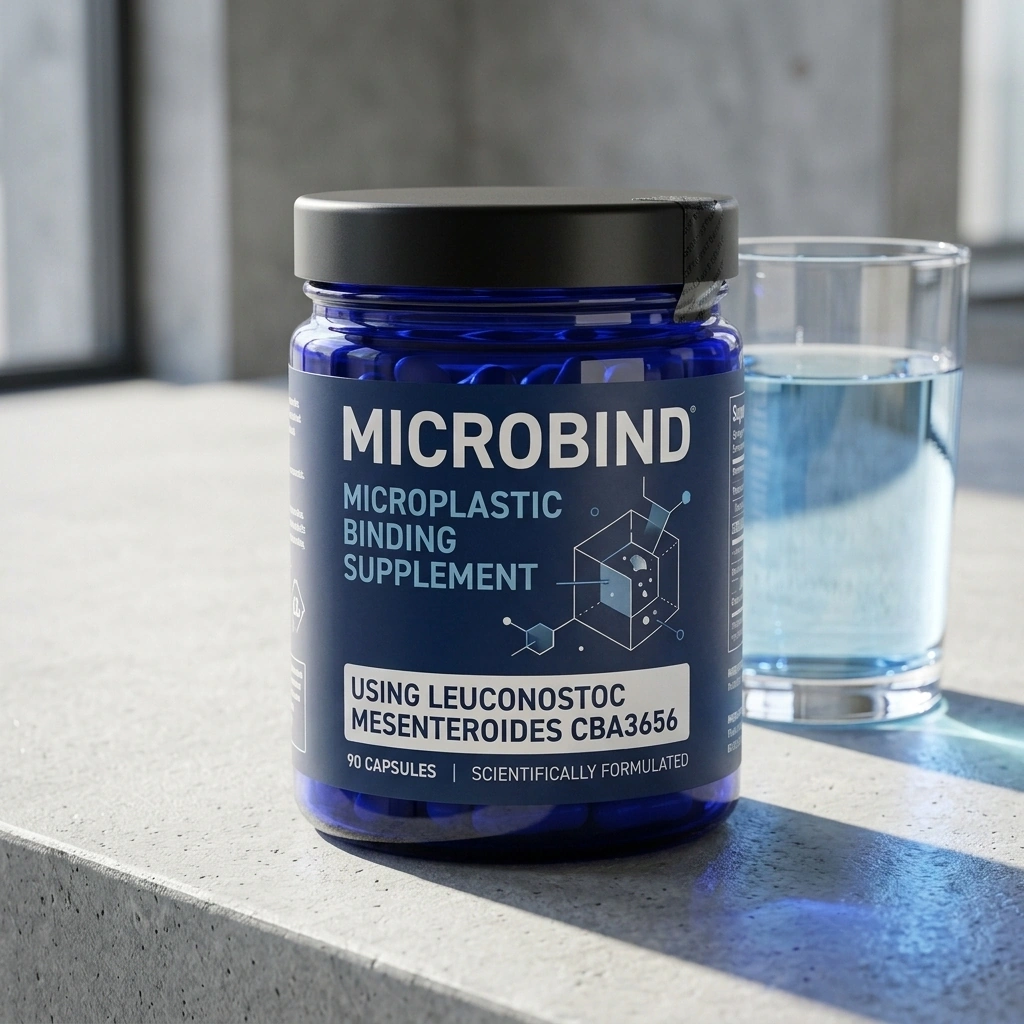
Microplastic Binding Supplement
Targeted microplastic elimination for biohackers using specialized microbial binding strain CBA3656
Targeted Cellular Sequestration Protocol
As the oral dosage disperses through the gastrointestinal transit, the patented cell wall architecture of Leuconostoc mesenteroides CBA3656 exhibits high-affinity surface trapping, binding micro- and nanoplastic particles directly to its bacterial matrix before systemic mucosal translocation can occur.
Synthetic Particle Sequestration
- ⊢ CBA3656
- ⊢ Toxin Bind
- ⊢ 100% Vegan
- ⊢ UV Shield
Molecular Integrity & Verification
Physiological Adsorption Barrier
Unlike transient bacterial strains that pass without interaction, the structural surface proteins of strain CBA3656 create electrostatic and hydrophobic anchors that lock onto particulate polymers in aqueous luminal environments.
Non-Colonizing Safe Clearance
The microplastic-bound biomass moves naturally through the digestive tract and is fully eliminated within standard digestive transit timelines, preventing bio-accumulation in tissues.
Laboratory Certified Purity
Every individual production run undergoes mass-spectrometry screening and microbiological assays to guarantee zero heavy metal contamination and active colony viability.
Amber Borosilicate Isolation
Encapsulated in high-grade pharmaceutical cobalt glass to eliminate photo-oxidation and prevent synthetic plastic leachable contamination from standard packaging bottles.
Formulation Reference Manifest
Frequently Addressed Protocol Inquiries
How does CBA3656 specifically bind to ingested microplastics?
Leuconostoc mesenteroides CBA3656 possesses a specialized bacterial surface architecture with high surface hydrophobicity and electrostatic binding affinity. As synthetic microplastic fragments travel through the gastrointestinal tract, the probiotic cells aggregate around and adhere to these inert particles. This physical binding traps the microplastics within the digestive lumen, preventing…
When and how should I take MICROBIND each day?
We recommend taking three capsules daily alongside a full 8-ounce glass of filtered spring water. Taking MICROBIND with your first meal of the day optimizes gastrointestinal transit alongside food boluses where microplastics are most commonly present. For maximum bacterial viability, store the cobalt glass jar in a cool, dry environment away from excessive heat or direct sunlight.
Why can't generic probiotic supplements bind environmental microplastics?
Standard off-the-shelf probiotics are formulated strictly for general digestive comfort or microbiome diversity using standard strains like Lactobacillus acidophilus, which lack microplastic binding capability. MICROBIND utilizes CBA3656, a distinctive bacterial strain scientifically validated for its physical binding affinity toward synthetic polymer matrices. Additionally, our…